
Posted on February 12, 2026 by Don McDaniel
What's driving it and why
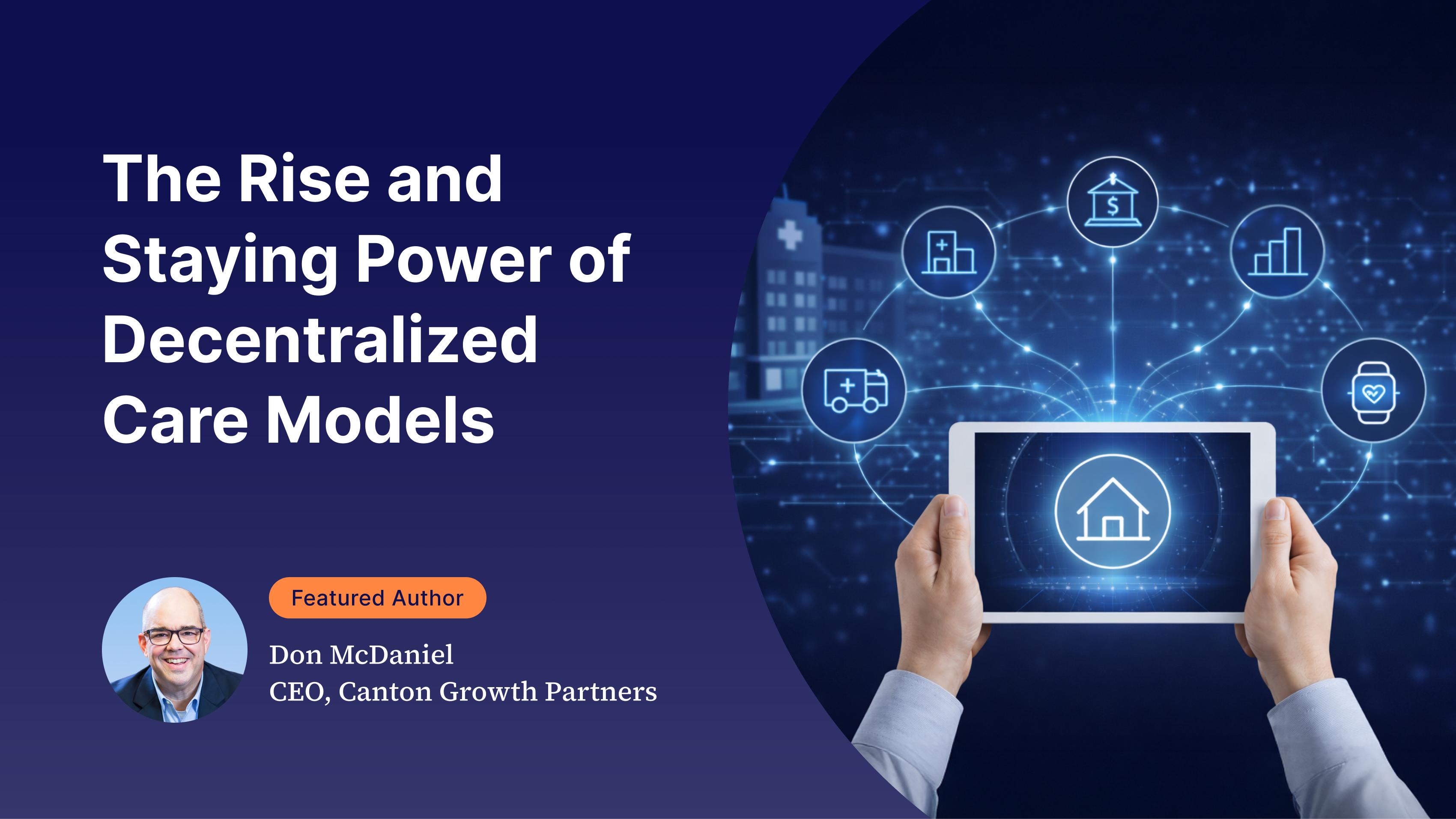
Healthcare delivery is undergoing a profound transformation. Aging populations, workforce constraints, rising costs, and shifting patient expectations are pushing care out of traditional hospitals and clinics and into homes, digital channels, and community settings. What began as pandemic-era experimentation has accelerated into a fundamental shift in how care is accessed, delivered, and financed. Decentralized care models are emerging as strategic pillars of modern health systems.
Decentralized care is a response to real pressures on the healthcare system and a proactive adaptation to value-based care incentives that reward outcomes, efficiency, and patient-centered delivery.
In this article, we explore what’s driving the shift to decentralized care, why it has staying power, and examples of innovative care models and organizations leading the way.
What’s Driving Decentralized Care Models in Healthcare Today
The push toward decentralized care is driven by several interrelated forces:
1. System Capacity Pressures
Hospitals are operating near or at capacity, with full inpatient units and emergency departments under strain. Traditional models cannot scale to meet rising demand for acute, chronic, and routine care. Delivering care outside centralized facilities helps alleviate this pressure and improves throughput.
2. Value-Based Care Incentives
Healthcare financing is shifting from fee-for-service toward value-based care models that reward improved outcomes, lower total cost of care, and preventive strategies. Treating patients in lower-cost settings like homes or outpatient centers aligns directly with these incentives, making decentralized models financially attractive.
3. Patient Expectations and Experience
Consumers increasingly expect healthcare to be convenient, transparent, and personalized, similar to retail and digital services. Patients value care that is closer to home, easier to access, and integrated with their lifestyles and preferences.
4. Technology Advancements
Telehealth, remote patient monitoring, wearable devices, and digital platforms enable high-quality care outside traditional settings. These technologies make it feasible to manage complex conditions, track vitals, and deliver real-time care interventions without brick-and-mortar infrastructure.
Taken together, these forces are reshaping the healthcare delivery landscape and creating a durable foundation for decentralized care models that can improve patient satisfaction, clinical outcomes and affordability.
Decentralized Care Models Leading the Transformation
Forward-thinking health systems and innovative companies are building models that deliver care closer to patients. These approaches maintain quality while improving financial performance and patient satisfaction. Each model addresses specific capacity, access, or cost challenges while aligning with value-based payment incentives.
Leading examples include:
- Hospital-at-Home: Acute Care in the Patient's Home
- Home-Based Primary and Chronic Care
- Urgent Care, Retail Clinics, and Community Care Hubs
- Telehealth and Virtual Care
- Mobile Health Units and Pop-Up Clinics
- Remote Monitoring and Continuous Care
- IV therapy
Hospital-at-Home: Acute Care in the Patient’s Home
Hospital-at-home (HaH) programs deliver hospital-level care to patients in their own homes. Examples of care include:
- IV therapy
- Physician oversight
- Diagnostics
Why It Matters
Studies show that HaH can achieve outcomes comparable to inpatient care while reducing complications like hospital-acquired infections, improving patient satisfaction, reducing costs, and increasing access for underserved populations.
Examples of Leaders
- Advocate Health’s HaH Program – Expanded across multiple facilities, serving thousands of patients and avoiding tens of thousands of inpatient bed days while reporting lower readmission rates and higher satisfaction than traditional inpatient care.
- Mayo Clinic’s Advanced Care at Home (ACH) – A hybrid virtual and in-person model that combines a physician-staffed command center with in-home visits for high-acuity patients, demonstrating how decentralized care can bridge urban and rural settings.
- DispatchHealth– An organization powering decentralized hospital care and command center oversight, enabling systems to treat acute conditions outside traditional infrastructure.
These models combine in-home visits from clinicians with remote monitoring technology.
Outcomes & Savings
HaH programs can improve recovery experiences, reduce readmissions, and help alleviate inpatient capacity constraints, while often costing significantly less per episode than traditional hospital stays.
Home-Based Primary and Chronic Care
Home-based primary and chronic care programs focus on proactive management of long-term conditions and preventative care, particularly for seniors and high-risk patients.
Why It Matters
Delivering care where people live improves adherence, strengthens provider-patient relationships, and reduces avoidable hospital visits.
Examples of Leaders
- Carelon Health (formerly CareMore) – Known for a comprehensive care-coordination model serving Medicare and Medicaid populations.
- Avel eCare (formerly Avera eCARE) – Provides virtual primary and specialty care services across rural and underserved communities, improving access to expert providers.
- Virtual Ward Programs in the NHS (UK) – Monitor patients after discharge or manage chronic conditions remotely via apps and digital platforms, freeing up hospital beds and improving continuity of care.
Outcomes & Savings
This model supports value-based care goals by reducing acute exacerbations, shortening lengths of stay, and lowering total cost burden through early intervention and continuous oversight.
Urgent Care, Retail Clinics, and Community Care Hubs
These decentralized sites deliver routine, preventive, and low-acuity services closer to where patients live and work often outside traditional hospital settings.
Examples of Leaders
- CVS MinuteClinic – Embedded walk-in clinics offering a range of preventive and chronic care services.
- Walgreens Healthcare Clinics – Provide accessible care for minor illnesses and preventive screenings.
- Gouverneur Health (Community Health Hubs) – Offers a community-based health center model emphasizing accessible outpatient and wellness services.
Outcomes & Savings
Retail and community clinics help divert non-urgent care from emergency departments, reduce healthcare costs, and improve primary care access in underserved neighborhoods.
Telehealth and Virtual Care
Telehealth involves virtual consultations, remote triage, and digital communication between patients and clinicians.
Examples of Leaders
- Mercy Virtual – A dedicated telemedicine center operating like a “virtual hospital,” providing remote diagnosis, prognosis, and ongoing monitoring across partner systems.
- Teladoc Health – Delivers 24/7 virtual care across multiple specialties, including chronic condition management and mental health services through an integrated platform.
- Iris Telehealth – Offers on-demand behavioral health and therapy services integrated with system workflows.
Outcomes & Savings
Telehealth improves access, reduces unnecessary ED usage, and supports continuity of care, especially for behavioral health, specialty consults, and chronic disease check-ins.
Mobile Health Units and Pop-Up Clinics
These models deploy mobile clinics or temporary health locations to deliver screenings, vaccinations, diagnostics, and specialty care to underserved or remote populations.
Examples of Leaders
- Mobile health vans from major health systems – Often operated by academic or safety-net hospitals to serve rural or low-access areas.
- University-affiliated mobile clinics – Bring services to communities with barriers to traditional care access.
Outcomes & Savings
Mobile care reduces access gaps and catchment inefficiencies, lowering long-term disease burden by offering preventive and early treatment services.
Remote Monitoring and Continuous Care
Remote patient monitoring (RPM) uses connected devices to track vital signs and clinical data outside care settings.
Examples of RPM:
- Health systems leveraging RPM in hospital-at-home and post-discharge programs, enabling real-time vital monitoring.
- Wearables and integration programs that alert clinicians to deterioration before acute events.
Outcomes & Savings
RPM adoption is growing rapidly, with tens of millions of patients using these systems—expected to expand significantly in the next year. Remote monitoring can reduce readmissions and enable early interventions, thereby lowering total cost of care and improving safety.
Private Equity's Growing Investment in Decentralized Care
Why Investors Are Backing These Models
Private equity firms are actively investing in decentralized care models, recognizing the structural advantages and growth potential these businesses offer. The investment thesis is straightforward: these models align with where healthcare reimbursement is heading, address real capacity constraints, and offer opportunities for profitable scale.
Several factors make decentralized care attractive to investors:
Aligned with Value-Based Payment Models
As healthcare shifts toward value-based reimbursement, investors see decentralized models as better positioned to succeed. These care delivery approaches inherently focus on prevention, early intervention, and lower-cost settings. This alignment creates durable competitive advantages as traditional fee-for-service revenues decline.
Scalable and Technology-Enabled
Unlike brick-and-mortar expansions that require significant capital expenditure, many decentralized models leverage technology platforms that can scale rapidly. Hospital-at-home programs, telehealth services, and remote monitoring solutions can expand into new markets without building physical infrastructure. This scalability appeals to investors seeking efficient growth.
Fragmented Market with Consolidation Opportunity
The decentralized care landscape remains fragmented, with numerous regional players and emerging startups. Private equity sees opportunities to consolidate best practices, achieve operational efficiencies, and build national platforms that can serve multiple health system partners.
Examples of PE-Backed Decentralized Care Companies
Private equity investment is flowing into companies across the decentralized care spectrum:
- Home health and hospital-at-home platforms – PE firms have backed several companies' building technology and service platforms that enable health systems to deliver acute care at home.
- Primary care house call services – Investment in companies serving Medicare Advantage and high-risk populations with in-home primary and chronic care management.
- Retail clinic networks – Capital flowing into community-based urgent and primary care concepts that compete with traditional practices.
- Remote monitoring and virtual care platforms – Funding for technology companies providing RPM devices, data analytics, and virtual care coordination tools.
The Opportunity for Health Systems
For health system executives, private equity interest validates the business case for decentralized models. It also creates partnership opportunities. Health systems can leverage PE-backed platforms and services to accelerate their own decentralized care strategies without building everything in-house. These partnerships can provide access to proven technology, operational expertise, and capital to scale quickly.
The Bottom Line: Why Decentralized Care Is Here to Stay
Decentralized care is not a temporary reaction—it is a strategic evolution of how healthcare is delivered. Fueled by value-based care incentives, patient expectations, technology advancements, and significant private equity investment, these models improve access, enhance outcomes, and reduce cost burdens across the system.
Health organizations that embrace these models, whether through internal development or strategic partnerships, are better positioned in the market. They will thrive in a landscape defined by capacity constraints, workforce shortages, and shifting reimbursement frameworks.
The future of healthcare lies not in walls and beds, but wherever the patient is, supported by technology, human-centered design, and payment models that reward value over volume.
Learn more about Canton Growth Partners GTM services for innovative care organizations and private equity healthcare portfolio companies.
.png)
.png)

.png)